Bone Grafting Before Dental Implants: Do You Really Need One?
A bone graft before a dental implant is needed when the jawbone doesn't have enough height, width, or density to hold the implant securely. Bone loss can happen after extractions, long-term denture wear, or gum disease. A 3D scan at Inspire Dental in Tigard shows whether grafting, a sinus lift, or no graft at all is right for you.
This question comes up almost every week in our consultation room. A patient hears the words "bone graft" and immediately pictures a second surgery, more cost, and more waiting. We understand. So let's walk through what's actually involved, who truly needs one, and who doesn't.
At Inspire Dental on SW Pacific Hwy, we've helped many King City and Summerfield neighbors decide whether grafting belongs in their implant plan. The answer is more individual than people expect.
Why do some patients need a bone graft before a dental implant?
Implants are titanium posts that fuse to your jawbone. To do that successfully, the bone has to be tall enough, wide enough, and dense enough to hold the post during healing. When it isn't, we either build up the site first or pick a different approach.
Bone loss happens for a few common reasons. The biggest is time without a tooth. According to a landmark study in the Journal of Clinical Periodontology (Schropp et al., 2003), the alveolar ridge can lose up to 50% of its width within 12 months of an extraction if nothing is done to preserve it. That's a significant change in less than a year.
Long-term denture wear is another major factor. We see this often with patients in the Summerfield retirement community who've worn dentures for a decade or more. The constant pressure on the ridge gradually flattens it. Gum disease that destroyed bone before the tooth came out is the third common cause.
The American Association of Oral and Maxillofacial Surgeons states clearly that implants require adequate bone volume and density for successful osseointegration. No shortcut around it.
How do we know if you need a graft?
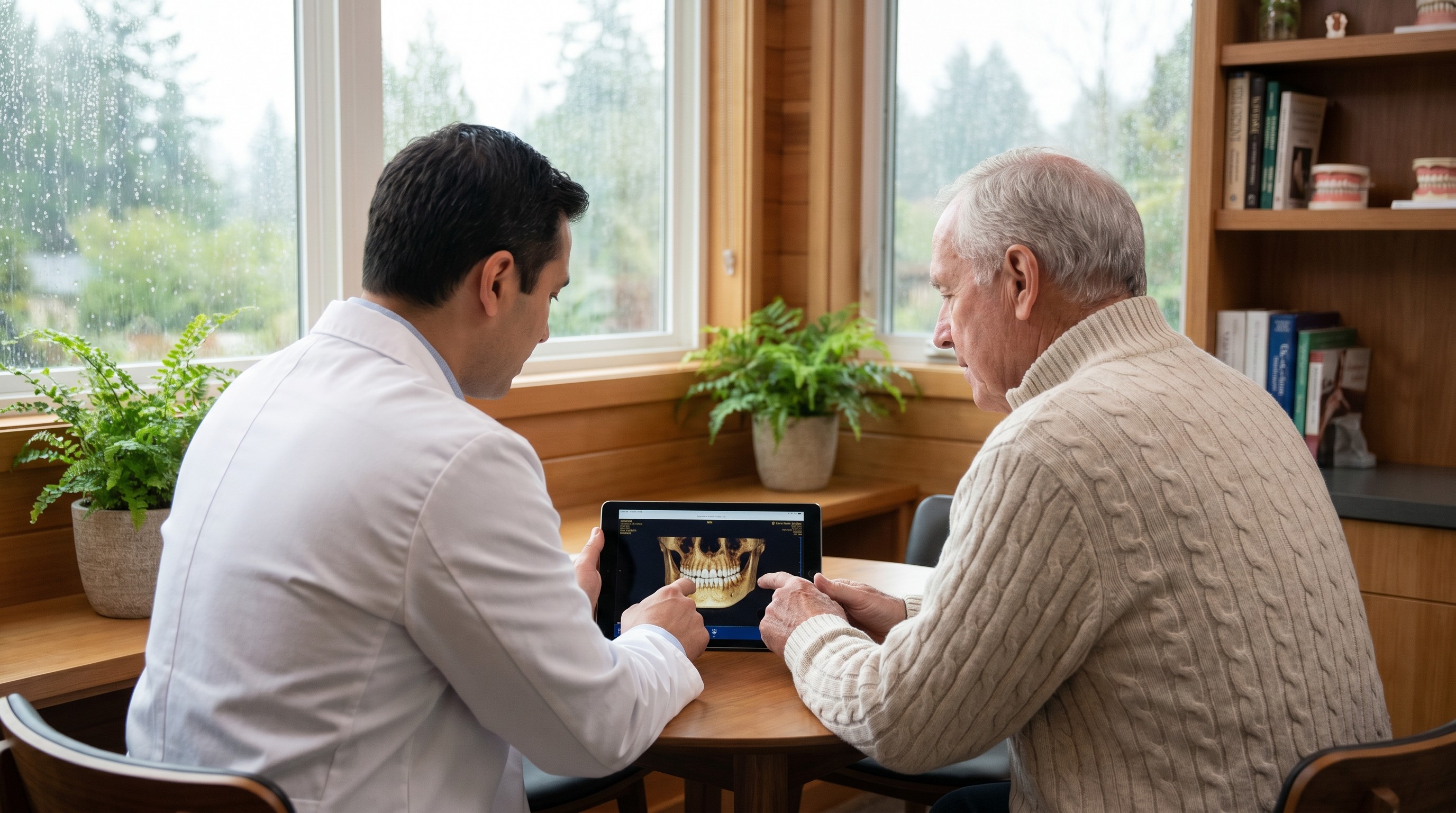
We don't guess. The deciding tool is a 3D cone beam CT scan, taken right here in our Tigard office. It shows the exact height and width of bone at your implant site, the position of nerves, and the floor of your sinus.
From there, the answer usually falls into one of three buckets:
Plenty of bone. No graft needed. Straight to implant placement.
Borderline bone. A small simultaneous graft alongside the implant.
Significant deficit. A standalone graft first, then implant placement a few months later.
A recent patient from Bull Mountain assumed she'd need extensive grafting because she'd been missing a molar for almost two years. Her CBCT scan told a different story. She had enough bone for a standard implant the same week. Plenty of patients are pleasantly surprised.
What are the main types of bone grafts for implants?
Not every graft is the same procedure. The four most common in our practice:
Socket preservation graft. Placed at the moment of extraction. This is the easiest way to prevent the rapid bone loss that follows tooth removal. A Cochrane Review on alveolar ridge preservation confirms it reduces post-extraction resorption compared to letting the socket heal on its own.
Ridge augmentation. Used when width or height has already been lost. We rebuild the ridge with grafting material and a protective membrane, then wait for it to mature.
Sinus lift (sinus augmentation). For upper back teeth. When those teeth are lost, the maxillary sinus slowly expands downward into the space, a process called pneumatization. AAOMS clinical guidelines note this is one of the most common reasons grafting is needed in the upper jaw.
Material options. AAOMS patient materials describe four sources: autograft (your own bone), allograft (processed human donor bone), xenograft (typically bovine), and synthetic alloplasts. We pick based on the size of the defect and your medical history. All are tightly regulated and safe.
What is the timeline from graft to final implant crown?
This is the part patients commuting to Intel or Nike from the Pacific Highway 99W corridor really want to know. Realistic timelines:
Socket preservation: about 3 to 4 months of healing before implant placement
Larger ridge augmentation: 4 to 6 months
Sinus lift: 4 to 9 months depending on technique
Implant osseointegration after placement: another 3 to 4 months before the final crown
Yes, it adds time. But it adds decades of stability on the back end. We'd rather build the foundation right.
Does the bone graft hurt, and what is recovery like?
Most patients tell us the graft itself was easier than the tooth extraction that preceded it. Expect some swelling and minor bruising for 3 to 5 days. Soft foods for the first week. Salt water rinses. A short course of medication if we feel it's warranted.
One non-negotiable: no smoking. The ADA and peer-reviewed implant literature are consistent. Smoking significantly increases the risk of graft failure and implant failure. If you smoke, we'll talk honestly about timing before we start.
Recovery for retirees in King City tends to be smooth. Recovery for working parents in Tigard and Tualatin tends to be smooth too. Follow the instructions. That's the whole trick.
Can you skip the graft? Alternatives we sometimes consider
Sometimes yes. A few real options:
Shorter or narrower implants. Modern implant designs let us work with less bone than was possible 15 years ago.
All-on-4 angled implants. For full-arch cases, tilted implants can anchor into denser bone areas and avoid the sinus entirely. This is a signature service at our Implant Center.
Zygomatic implants. For severe upper jaw bone loss. These anchor into the cheekbone. We refer out for these when appropriate.
That said, sometimes grafting really is the right call. If a shortcut compromises long-term success, we'll say so. Implants are a 20-plus year investment. We treat them like one.
Frequently Asked Questions
How much does a bone graft for a dental implant cost?
A small socket preservation graft is typically a few hundred dollars and is often bundled with the extraction. Larger ridge augmentation or a sinus lift runs higher, often $800 to $2,500 depending on size and materials. We give you a written estimate after your CBCT scan so there are no surprises.
Will dental insurance cover a bone graft before an implant?
Coverage varies widely. Some medical and dental plans cover grafting when it's medically necessary for function. Others exclude it. Our front desk submits pre-authorizations and gives you a clear breakdown of what your specific plan will and won't pay before treatment begins.
How long after extraction can I still get an implant without a graft?
There's no fixed deadline, but the longer you wait, the more bone you tend to lose. The first 6 to 12 months see the most change. Many patients who waited several years still have enough bone for an implant. Only a 3D scan can tell for sure.
Is bone graft material safe and where does it come from?
Yes. All graft materials used in dentistry are highly regulated. Donor and bovine sources are processed to remove all cells and disease risk, leaving only the mineral scaffold your body uses as a template. Synthetic options contain no biological material at all. We're happy to walk through which one we recommend for you and why.
Can I have the bone graft and implant placed on the same day?
In many borderline cases, yes. If the bone deficit is small, we can place the implant and pack graft material around it in the same visit. For larger defects, we stage the procedures for better long-term success. The CBCT scan makes this call clear.
If you've been told you need a graft, or you're just wondering whether implants are realistic for you, we'd love to take a look. Call Inspire Dental in Tigard at (503) 639-4330 to schedule a consultation with Dr. Choi and our team. We'll show you your scan, explain your options in plain language, and let you decide.