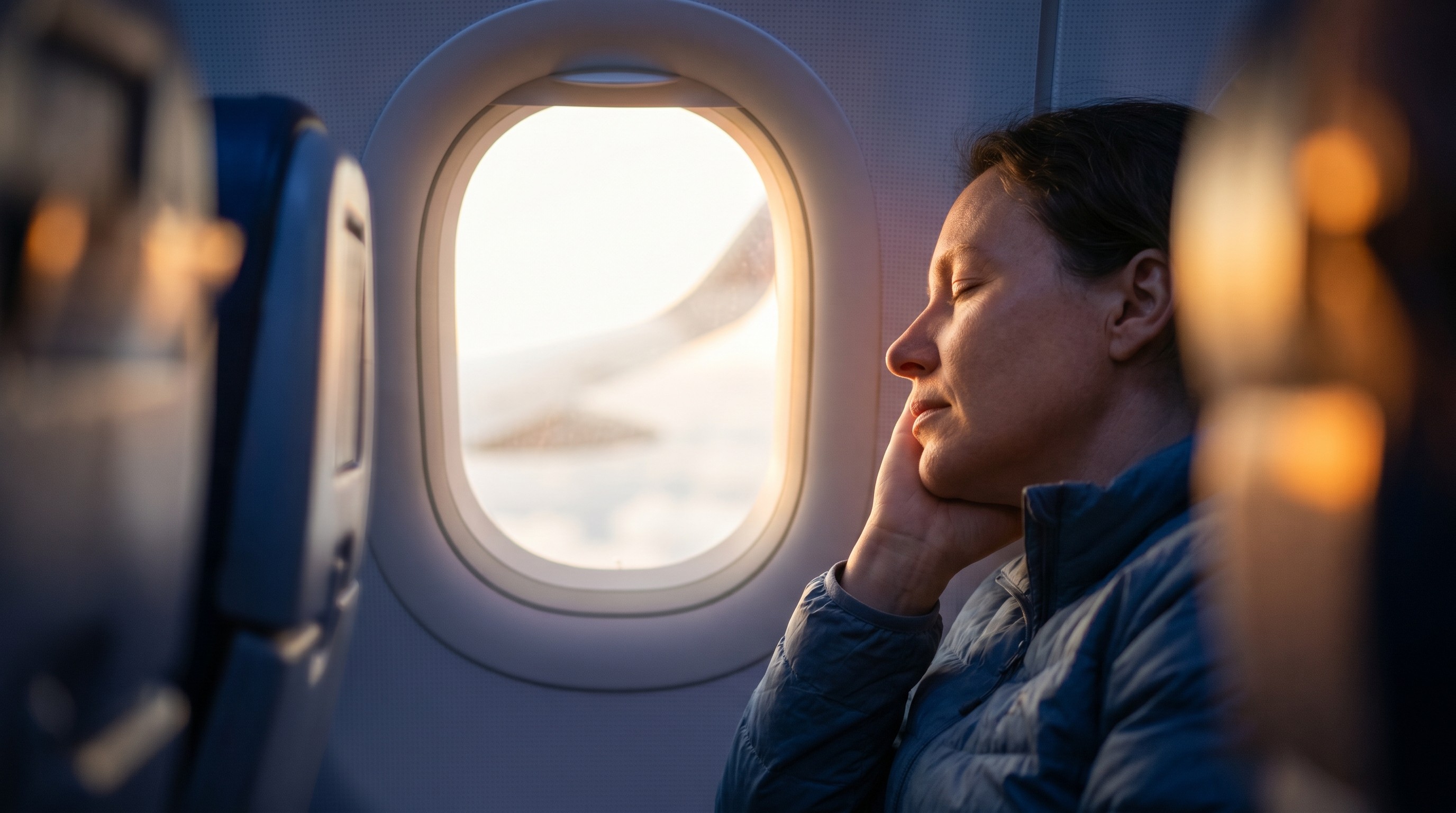
Why Does My Dental Implant Feel Pressure When I Fly?
Mild pressure or fullness around an upper dental implant during takeoff and descent is usually normal. Your upper jaw sits close to the maxillary sinus, and cabin pressure changes cause trapped air to expand. The sensation typically fades within minutes of landing. Sharp pain, drainage, or persistent throbbing warrants a call to your dentist.
At Inspire Dental, we hear this question often from Bull Mountain patients who fly out of PDX for work. A software engineer flying weekly to client sites, a sales director catching the 6 a.m. to San Jose, a retiree heading to see grandkids in Phoenix. They all describe something similar: a dull fullness around an upper implant that shows up only on the plane.
It's a real sensation. And in most cases, it has a simple explanation.
What does implant pressure during flying actually feel like?
Patients describe it a few different ways. A fullness in the upper jaw. A mild ache around an upper molar or premolar implant. Sometimes a soft throb that pulses for a minute or two during takeoff or descent.
It often feels a lot like sinus congestion or that classic ear-popping pressure. Many people don't even connect it to their implant at first. They assume it's just the flight. Then they notice the sensation is centered around one specific tooth.
Here's the key: it almost always resolves within minutes of reaching cruising altitude or landing. Brief. Self-limiting. Gone by the time you grab your bag.
Why does cabin pressure affect upper dental implants?
This is the part that surprises people. Commercial cabins are pressurized, but not to sea level. According to FAA aerospace medical references, most aircraft cabins during cruise feel like roughly 6,000 to 8,000 feet of elevation. That's a meaningful pressure change from the ground.
Your upper molar and premolar roots live unusually close to the floor of the maxillary sinus. In some patients, the bone separating them is paper-thin. When an implant is placed in that region, especially after a sinus lift, the implant tip can sit right at or just below the sinus floor.
Now add physics. Boyle's Law says that at constant temperature, gas volume expands as pressure drops. Trapped air inside your sinuses expands at altitude and contracts on descent. If there's any inflammation, fluid, or recent surgical site nearby, that expanding air presses on tissues that include the implant area.
Natural teeth feel this too. It's called barodontalgia, and it's been documented in dental literature for decades, including case reports in the Journal of the American Dental Association. Implants just transmit the sensation a little differently because they're rigidly fused to bone with no shock-absorbing ligament.
Is this pressure a sign something is wrong?
Most of the time, no. Brief pressure that comes and goes with altitude changes is typical.
But there are warning signs we want our patients to know. Call us if you notice:
Sharp, stabbing pain rather than dull fullness
Bleeding from the implant site
Clear or cloudy drainage from the nostril on the implant side
A salty or metallic taste that lingers
Air escaping through the implant area when you blow your nose
Fever or facial swelling
Throbbing that doesn't stop after you land
Those symptoms can point to a sinus communication, peri-implantitis, or a sinus infection unrelated to the implant. Any of them deserves a same-day look.
How soon after implant surgery can I fly?
This is the question we get most from our Bull Mountain tech professionals who can't always control their travel calendar.
For a straightforward upper implant placement, most oral surgeons recommend waiting 24 to 72 hours before flying. The reasons are practical: the first 48 hours carry the highest risk of bleeding, swelling, and clot disruption. A long flight in a dry cabin doesn't help any of that.
If you had a sinus lift or significant bone graft, the wait is longer. Many surgeons advise 1 to 2 weeks, sometimes more. That elevated sinus membrane needs time to settle before you ask it to handle pressure swings. Always confirm with the surgeon who did the procedure.
Short hops and cross-country flights also differ. A 45-minute Alaska shuttle to Seattle is not the same stress as a red-eye to the East Coast. Tell us your itinerary and we'll give you a straight answer.
How can I reduce implant pressure on flights?
A few simple habits make a real difference:
Use a saline nasal spray 30 minutes before takeoff and again before descent
Stay hydrated. Cabin air is desert-dry and dehydration thickens sinus mucus
Skip alcohol on the plane. It dries you out and dilates blood vessels
Chew sugar-free gum or yawn during ascent and descent to equalize pressure
Ask your physician about a decongestant before flying. Do not take one in the first week after implant surgery without clearance from your surgeon
For elective travel, schedule flights well after your implant has integrated, usually 3 to 6 months post-placement
That last one matters. A fully integrated implant behaves predictably at altitude. A healing one is less so.
When should you contact Inspire Dental?
If pressure doesn't resolve after you land, call us. If you notice nasal drainage, a taste change, or air movement through the implant site when you blow your nose, call us the same day. Persistent post-flight pain at the implant site is not something to wait out.
We see patients from across the Pacific Highway corridor, including travelers driving up from Sherwood and Tualatin and folks coming off Highway 217 from the Beaverton-Hillsboro tech corridor. Same-day appointments are available for travel-related concerns. We'd rather check and reassure you than have you fly home worried.
Brief pressure at altitude is physics. Persistent pain after landing is a phone call.
Frequently Asked Questions
Can flying loosen a dental implant?
No. A properly integrated implant is fused to bone and won't loosen from cabin pressure changes. The forces involved are tiny compared to chewing. If your implant feels mobile after a flight, that mobility was almost certainly present before takeoff and needs evaluation regardless of travel.
How long after implant surgery is it safe to fly?
For a routine upper implant placement, most oral surgeons recommend 24 to 72 hours. For a sinus lift or significant bone graft, 1 to 2 weeks is more typical. Long flights and high-altitude destinations increase the wait. Always confirm with the surgeon who performed your procedure since recommendations vary by case.
Why do only my upper implants feel pressure on flights, not the lower ones?
Anatomy. Upper molar and premolar roots sit close to the maxillary sinus floor, where cabin pressure changes affect trapped air. The lower jaw has no comparable air-filled cavity above it, so pressure shifts don't translate to the same sensation. It's why ear popping and upper tooth fullness both happen at altitude and lower teeth stay quiet.
Does a sinus lift make air travel more uncomfortable?It can in the first few weeks after surgery while the elevated sinus membrane and graft are settling. Once healing is complete and the implant has integrated, most patients fly without any issue. If you had a sinus lift recently and have a trip coming up, call us before you book changes. We can advise based on your specific timeline.
Should I take a decongestant before flying with a new implant?
Not without clearance from your oral surgeon, especially within the first week or two after surgery. Decongestants constrict blood vessels, which can affect healing tissue. After full integration, a standard pre-flight decongestant is generally fine for most adults, but check with your physician about any heart or blood pressure considerations.
Flying with an implant should not be stressful. If you're planning a trip and want a quick check before you go, or if you've just landed and something feels off, call Inspire Dental in Tigard at (503) 639-4330. We're here on Pacific Highway and we'll get you in.