Why does food keep getting stuck around my dental implant?
Some food trapping around a dental implant is common because implants sit in bone without the slight cushion natural teeth have, and the gum shape around the crown is a little different. Occasional packing is usually harmless. Daily trapping with bleeding, odor, or swelling can signal an open contact or peri-implant inflammation that needs a closer look.
At Inspire Dental in Tigard, this is one of the most frequent questions we hear from implant patients, especially folks who have lived with their implant for a year or more. A retiree in King City recently told us she loves her new tooth, but every dinner ends with her fishing chicken or salad greens out from the side of it. She wanted to know if something was wrong. Often, the answer is nuanced.
Let's walk through it.
Is it normal for food to get stuck around a dental implant?
A little food packing is normal, particularly in the first few weeks after a new crown is seated. Your tongue, cheek, and chewing pattern are still adjusting to a slightly different shape in your mouth.
Here's the key anatomical difference. Natural teeth are held in the jaw by a thin cushion called the periodontal ligament. According to peer-reviewed implant literature, that ligament lets natural teeth shift microscopically under chewing pressure, which helps food slide past instead of wedging in. Implants fuse directly to bone (osseointegration), so they don't have that tiny give. They stay put. Every single time.
The gum collar around an implant crown also has a different shape than the gum around a natural tooth. Dentists call this the emergence profile. The space just below the contact point, where the crown meets the neighbor, can be wider or shaped differently. Food finds those spaces.
What causes food to pack around an implant crown?
There are several common culprits, and sometimes more than one is at play.
Open proximal contact. This is the big one. Natural teeth drift slowly forward over a lifetime. The implant doesn't move. Over months or years, a gap can open between the implant crown and the natural tooth next to it. Studies in the Journal of Prosthetic Dentistry and Clinical Oral Implants Research have documented this in a substantial portion of implant cases over time.
Wider gum embrasure. The triangular space below the contact point may be more open around an implant than around a natural tooth.
Bone loss or gum recession. If the supporting bone or gum has receded, implant threads or the abutment can become exposed, creating new pockets for food.
Crown contour. Sometimes the crown shape itself doesn't fully fill the gumline space, especially if the implant sits deeper in the bone.
Changes in the neighbor. The tooth next door may have tilted, worn down, or developed decay along its edge, opening a new trap.
Notice what's not on that list. The implant itself failing. Food trapping is almost always about the space around the crown, not the implant body.
When is food trapping a warning sign?
Here's where you should pay attention. Food packing on its own is annoying. Food packing plus any of the following deserves a call to our office.
Bleeding when you floss or rinse near the implant
A bad taste or persistent bad breath localized to that spot
Visible gum swelling, redness, or pus
Pain or pressure when you chew on that side
A contact that feels noticeably looser than it did at placement
According to the American Academy of Periodontology, inflammation of the soft tissue around an implant is called peri-implant mucositis. When bone loss is also present, it becomes peri-implantitis. Plaque accumulation around implants is a primary risk factor for both, per AAP and European Federation of Periodontology consensus reports. Trapped food that sits there meal after meal feeds plaque. That's the connection.
Catch it early and it's usually reversible. Wait, and it gets harder to treat.
How should I clean around my implant at home?
Daily care around an implant is similar to natural teeth, with a few tweaks.
Soft-bristle brush, twice daily. Angle the bristles toward the gumline. Don't scrub hard. The crown surface can scratch.
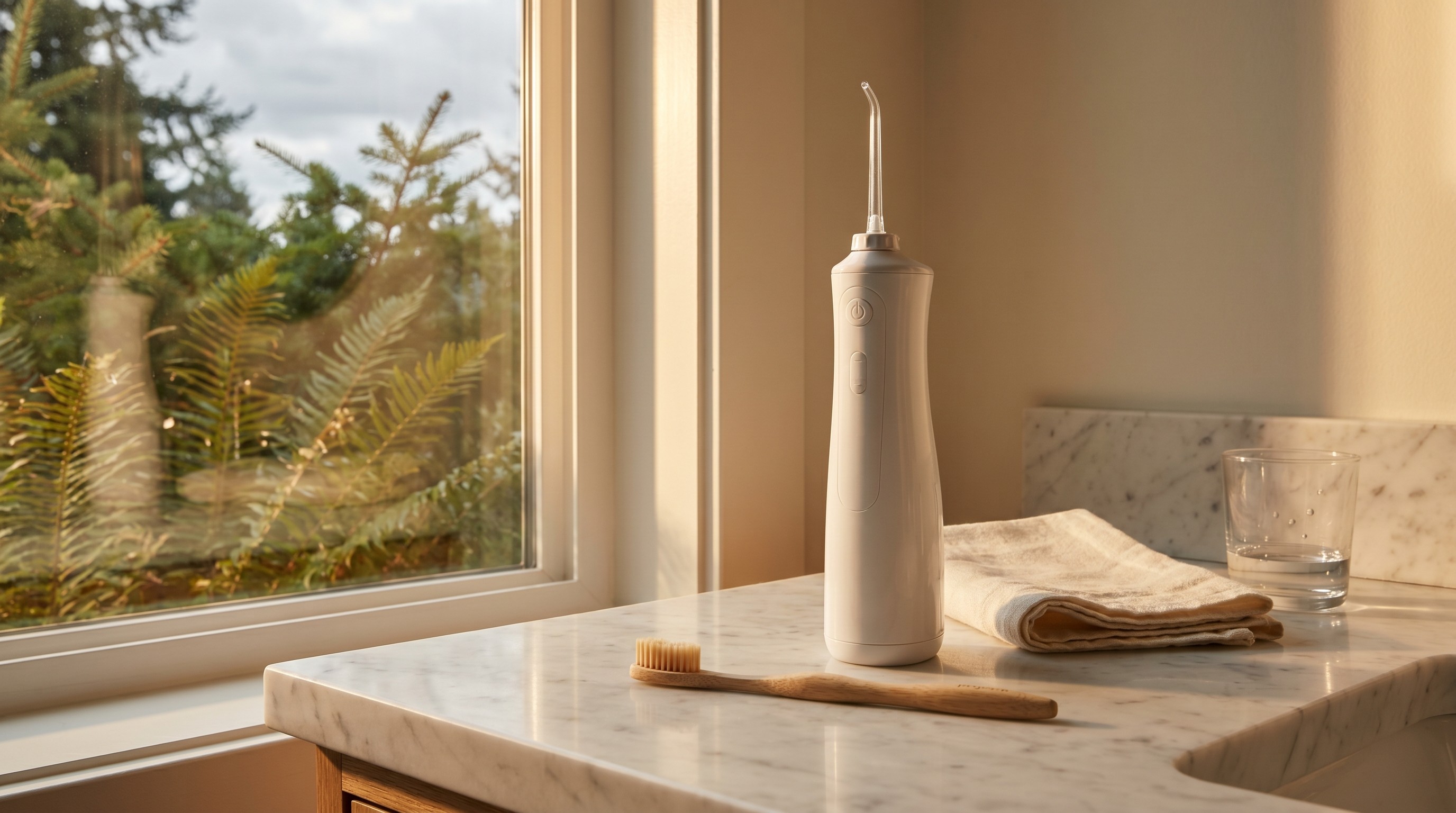
Water flosser. Studies in the International Journal of Dental Hygiene suggest oral irrigators can reduce plaque and gum inflammation around implants. Many of our Bull Mountain and Summerfield patients find a water flosser is the single biggest upgrade for implant hygiene.
Implant-safe floss or interdental brushes. Floss threaders, tufted floss, or a small interdental brush can reach the embrasure space below the contact.
Skip abrasive pastes. Charcoal and heavy whitening pastes can scratch crown surfaces over time.
Professional maintenance every 3 to 6 months. AAP clinical guidance recommends this interval based on individual risk factors. Our hygienists use implant-safe instruments that won't scratch the abutment or crown.
Simple habits. Big difference.
When should I call Inspire Dental in Tigard?
Call us if food packs around the implant every meal and home cleaning isn't keeping up. Call sooner if you notice bleeding, swelling, odor, or a contact that feels loose.
In the office, we can usually identify whether you're dealing with an open contact, a contour issue, or early peri-implant inflammation. Many open contacts can be repaired by adding a small amount of bonded material to the neighboring tooth, without replacing the implant crown. If the crown contour is the problem, we discuss options. If there's gum inflammation, we treat it directly and adjust your home care plan.
We serve patients across Tigard, Bull Mountain, King City, Summerfield, Tualatin, and the broader Pacific Highway 99W corridor. Same-day evaluation is often available for implant concerns. You shouldn't have to live with daily food packing or wonder whether something is wrong.
Frequently Asked Questions
Can an open contact next to an implant be fixed without replacing the crown?
Often, yes. In many cases we can add a small amount of tooth-colored bonded composite to the adjacent natural tooth to close the gap. It's a quick visit, no numbing required for most patients. If the gap is too wide or the crown shape is the issue, we discuss other options.
Is a water flosser safe to use around dental implants?
Yes. Use it on a low to medium setting and aim along the gumline, not directly into the gum pocket at full blast. Research supports water flossers as an effective tool for reducing plaque and inflammation around implants when used daily.
How often should implants be professionally cleaned?Most implant patients do well with cleanings every 3 to 6 months. Your exact interval depends on your gum health, plaque tendency, and whether you've had peri-implant issues before. We tailor that schedule at your visit.
Can food trapping around an implant cause it to fail?
Food itself doesn't fail an implant. The plaque and bacteria that build up in trapped food, left unchecked over months or years, can lead to peri-implantitis and bone loss, which can threaten the implant. Daily cleaning and regular professional maintenance keep that risk low.
Why does food only get stuck on one side of my implant?
Usually because the contact on that side has opened up, the neighboring tooth has shifted or worn, or the gum shape on that side is more open. A quick exam tells us which it is.
If food packing around your implant has become a daily frustration, call Inspire Dental in Tigard at (503) 639-4330. We'll take a careful look and walk you through your options.