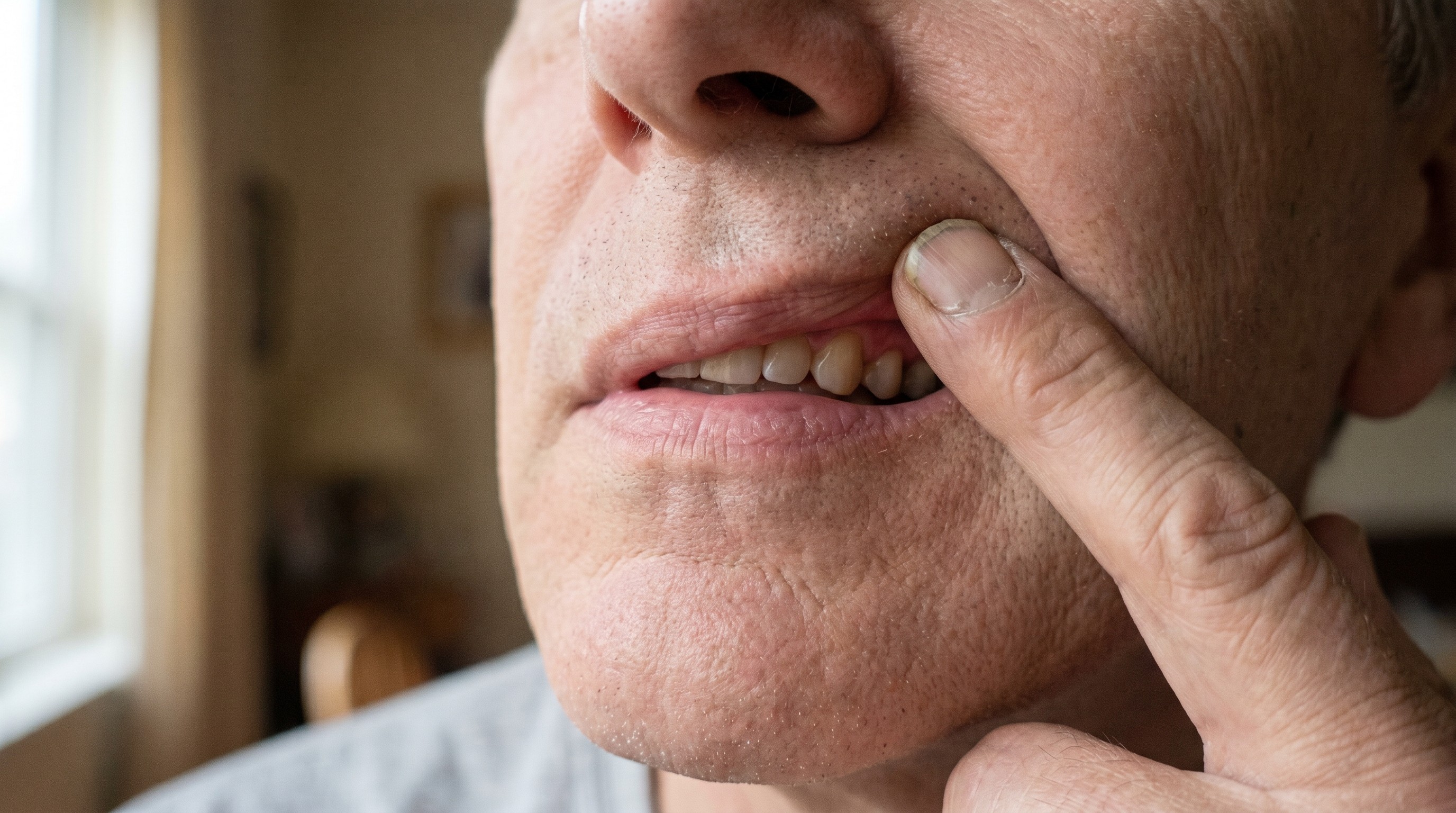
Why Does My Dental Implant Feel Itchy Around the Gumline?
Mild, occasional itching at the gumline around a dental implant can be normal as the soft tissue matures, but a persistent or worsening itch usually points to plaque buildup, trapped food, leftover cement, or early gum inflammation called peri-mucositis. If the itch lasts more than a couple of weeks or comes with redness or bleeding, have it checked.
At Inspire Dental in Tigard, this is one of the most common follow-up calls we get from patients who had implants placed a year or two ago. The healing is long over. The crown looks great. And then one day, that little patch of gum starts to itch. We've helped retirees from King City and Summerfield, plus working parents commuting up Pacific Highway, sort out what that itch actually means.
Let's walk through it.
Is it normal for the gum around a dental implant to feel itchy?
A little bit, sometimes, yes. The soft tissue around an implant collar keeps maturing for months after the crown goes on. As the gum keratinizes (toughens up) and forms its seal around the abutment, you may feel mild, fleeting sensations including a faint itch.
What is not normal is an itch that lingers. Or one that gets worse. Or one paired with any visible change in the gum. That's the line we draw in our office.
Soft tissue around an implant doesn't attach the same way it does to a natural tooth. According to the American Academy of Periodontology, implants lack the periodontal ligament fibers that connect gum to root, which means the soft tissue cuff is more vulnerable to inflammation from plaque. That biology matters here.
What causes itching specifically at the gumline (not deeper in the bone)?
When the itch is right at the surface where the crown meets the gum, the culprit is almost always something sitting in that junction. Common causes:
Plaque or biofilm trapped at the implant-gum collar. The most frequent cause, by a wide margin.
Residual cement from when the crown was originally seated. Peer-reviewed implant literature in journals like the Journal of Periodontology has flagged leftover cement as a well-documented trigger for peri-implant inflammation.
Food debris wedged under a slightly open contact between the implant crown and the neighboring tooth.
Early peri-mucositis. Per AAP consensus, this is reversible gum inflammation around an implant caused by bacterial biofilm. Caught early, it's straightforward to treat.
Toothpaste or rinse sensitivity. Sodium lauryl sulfate (SLS) and high-alcohol mouthwashes can irritate sensitive oral tissue in some people.
That's the short list. Most of the time, it's one of the first two.
How is gumline itching different from itching during early healing?
These are two different stories with two different timelines.
Early healing itch happens in the first few weeks after surgery. It feels deeper and more diffuse. It's tied to nerve regeneration and bone remodeling, and it usually fades on its own. We see it often in patients who've just finished the osseointegration phase.
Gumline itch shows up later. Months, sometimes years, after the crown was placed. It's localized to the soft tissue collar. You can usually point right to it with a fingertip. Different cause. Different fix.
If you're not sure which one you're dealing with, the timing is the biggest clue.
When should I be concerned and call the dentist?
Call us if the itch comes with any of these signals:
Redness, swelling, or puffiness around the implant crown
Bleeding when you brush or floss that specific spot
A bad taste or odor coming from around the implant
Pus, tenderness, or a gum that looks like it's pulling back from the crown
An itch that persists more than two weeks despite good cleaning
Those are your early warning signs. Peri-mucositis caught at this stage is reversible. Left alone, it can progress to peri-implantitis, which involves bone loss and is much harder to reverse. Earlier is always better.
How can I relieve itchy gums around my implant at home?
Before your appointment, or if the itch is mild and isolated, try this routine for a week:
Brush gently at the gumline with a soft or extra-soft brush, twice a day. Angle the bristles into the collar where the crown meets gum. No scrubbing.
Clean between the implant and neighbors daily. Use implant-safe floss, soft interdental picks, or a water flosser on a low setting. The ADA and AAP both point to daily mechanical biofilm removal as the single most important patient-side prevention for peri-implant disease.
Switch your rinse if you suspect irritation. Try an alcohol-free, SLS-free option for two weeks and see if the itch settles.
Skip abrasive whitening pastes around the implant collar. They can roughen the surface and trap more plaque.
Simple changes. Real difference.
How we evaluate persistent implant gum itching at Inspire Dental
When a patient calls about a stubborn itch, here's what happens at our Pacific Highway office near the Bull Mountain and King City border:
We start with a visual and gentle probing exam of the gum cuff. We're looking for inflammation depth, bleeding points, and any sign the soft tissue is pulling away. Then we check the crown itself. Is there a rough margin? An open contact catching food? Any residual cement we can see or feel?
If we find biofilm or calculus, we do a targeted cleaning using implant-safe instruments. (Standard metal scalers can scratch implant surfaces, so the toolkit matters.) From there, we coach you on the specific hygiene technique for that implant's location, because flossing a back molar implant is not the same as flossing a front one.
For established patients, we usually have same-week openings. Folks driving in from Sherwood, Durham, or Tualatin appreciate that we keep the visit focused and don't require a separate referral for implant maintenance.
An itch at the implant gumline is your tissue waving a small flag. Read it early, and the fix is usually simple.
Frequently Asked Questions
Can an itchy implant gum mean my body is rejecting the implant?
True rejection of a dental implant is extremely rare. Titanium and zirconia are highly biocompatible. What feels like rejection is almost always inflammation from plaque, cement, or mechanical irritation, and those issues are treatable. If you're worried, come in. We'd rather rule it out than have you stew over it.
Will a regular cleaning fix itching around my implant?
Often, yes. If the cause is biofilm or trapped debris at the gumline, a professional cleaning with implant-safe tools usually resolves the itch within a few days. If the itch keeps coming back after cleaning, we look deeper for cement, contact issues, or early peri-mucositis.
Is it safe to floss directly against the implant?
Yes, with the right technique. Use floss designed for implants or a soft interdental brush, and slide it gently into the space rather than snapping down. A water flosser on a low setting is also excellent around implant crowns. Daily cleaning at that junction is non-negotiable.
Could my new toothpaste be causing the irritation?It's possible. SLS, strong whitening agents, and certain flavoring oils can irritate the soft tissue around an implant in sensitive patients. If you recently switched products, try going back to your old one for two weeks and see if the itch fades. That little experiment tells us a lot.
How soon should I be seen if the itch comes with bleeding?
Within a week, ideally sooner. Bleeding around an implant is one of the earliest signs of peri-mucositis, and acting quickly keeps it reversible. Give us a call at (503) 639-4330 and we'll get you on the schedule.
If something around your implant isn't feeling right, we'd rather take a quick look now than wait for it to grow. Call Inspire Dental in Tigard at (503) 639-4330 or stop by our office on SW Pacific Hwy. We're here to help.