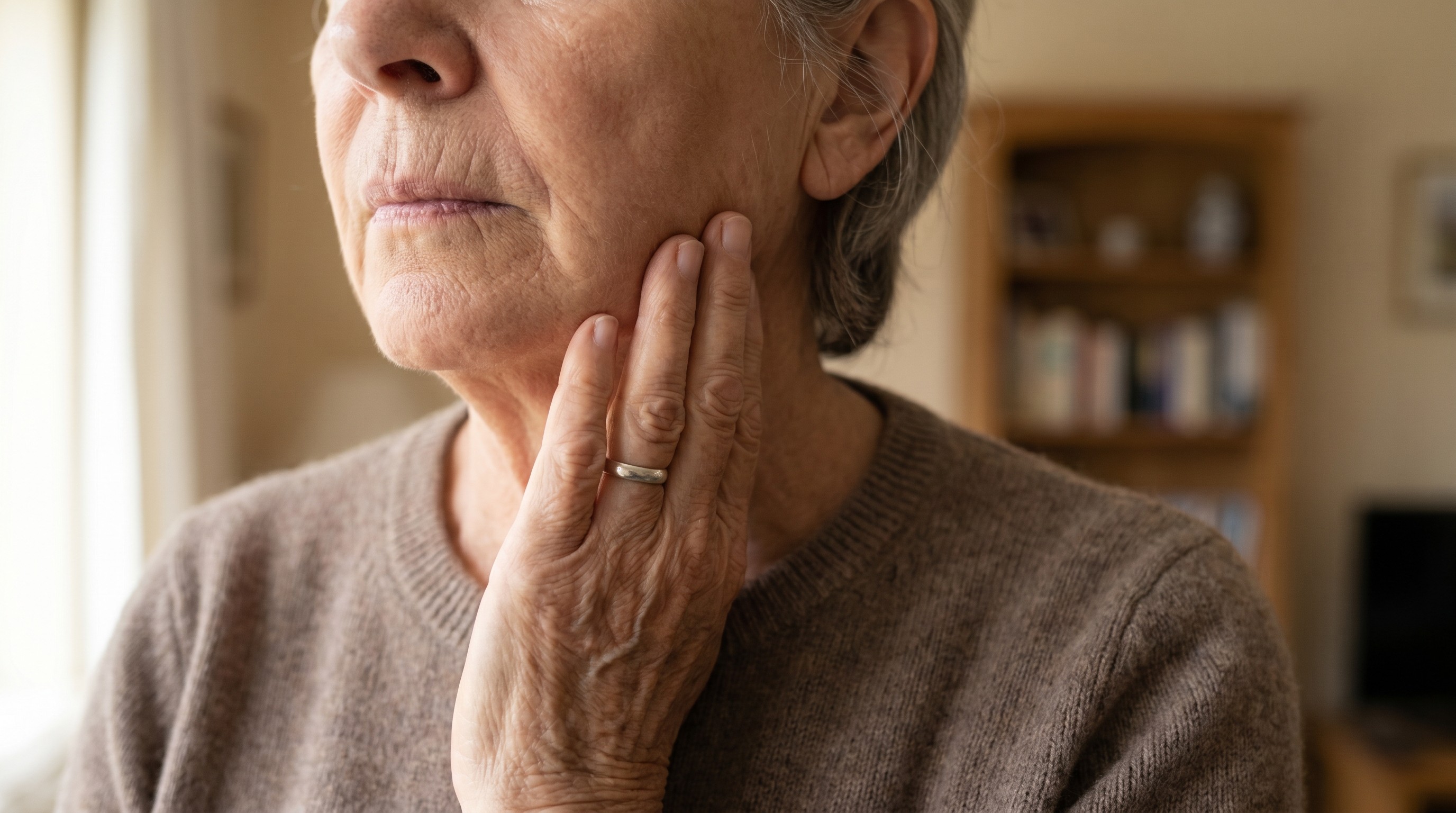
Why Does My Dental Implant Feel Like It's Pulsing With My Heartbeat?
A pulsing or heartbeat-like feeling in a dental implant is usually inflammation around the surgical site. Blood vessels dilate during healing, and you feel your pulse there. It is normal in the first 2 to 3 days after surgery if it steadily improves. If pulsing worsens after day 3, returns months later, or comes with fever, swelling, or bad taste, call your dentist.
At Inspire Dental in Tigard, this is one of the questions we hear most often after implant surgery. A retiree from Summerfield called us last spring at 9 p.m., worried because she could feel her pulse in her new lower implant while lying in bed. Her healing was textbook. The throbbing faded by day four. The sensation is unsettling, but it usually has a calm explanation.
What does a pulsing or heartbeat-like sensation in a dental implant actually mean?
The implant itself has no nerves. Titanium does not feel anything. What you are sensing is the living tissue around it: gum, bone, and the small blood vessels that flood the area during healing. When those vessels dilate, you feel each heartbeat through them. It is the same reason a freshly cut finger or a sprained ankle throbs in rhythm with your pulse.
This vascular throbbing is the body doing its job. Blood carries clotting factors, immune cells, and the building blocks of new bone. According to AAOMS patient education materials, post-surgical inflammation typically peaks 48 to 72 hours after oral surgery, then steadily decreases. That timing matches when most patients first notice the pulsing.
Is rhythmic throbbing normal in the first week after implant surgery?
Yes, in almost every case. Here is the timeline we share with patients at our office on Pacific Highway:
Day 1 to 3: Pulsing throb is expected. Inflammation is at its peak.
Day 4 to 7: The throbbing should fade noticeably each day.
Week 2: Most patients no longer feel rhythmic pulsing at all.
Trajectory matters more than intensity. A strong throb on day two that is half as strong on day four is healing. A mild throb on day two that doubles on day four is a problem.
Cold compresses help. The American Association of Oral and Maxillofacial Surgeons recommends ice in the first 24 to 48 hours after oral surgery to reduce swelling and discomfort. Sleeping with your head elevated on two pillows also takes pressure off the surgical site. Skip the aspirin unless we tell you otherwise. AAOMS guidelines note that aspirin can increase post-surgical bleeding and is generally not the right choice for implant pain.
When pulsing comes back months or years later, what could it mean?
This is the call we take more seriously. If your implant healed beautifully two years ago and now you feel a heartbeat where there was nothing, something has changed around the implant. The most common culprits:
Peri-implantitis. Inflammation of the gum and bone around the implant. The American Academy of Periodontology estimates peri-implantitis affects roughly 1 in 5 patients with dental implants over time, making it a leading cause of late implant complications.
Food impaction. A popcorn hull or a fiber wedged under the crown can trigger localized inflammation within a day.
Loose abutment screw. Micro-movement irritates the tissue and creates a steady throb when you bite or rest.
Sinus involvement. For upper implants placed near the sinus floor, pressure changes from a cold, allergies, or even bending over can transmit as pulsing. Peer-reviewed implantology literature documents this directly.
Late-onset pulsing is rarely an emergency overnight, but it is not something to wait out for weeks. We see patients from Bull Mountain, King City, and as far as Tualatin who let a small throb go for a month and then need more involved treatment than if they had come in early.
How can I tell the difference between normal healing and a problem?
Use the getting-better-or-worse rule. Pull out your phone the day after surgery and take a photo of the gum around the implant in good light. Repeat it every morning. Compare. Your eyes lie to you in the moment. Photos do not.
Normal healing looks like:
Pulsing that decreases day by day
No fever
Swelling that peaks around day 2 and shrinks after
No bad taste or pus
Warning signs that need a call:
Pulsing that intensifies after day 3
Fever over 100.4°F. The ADA notes this temperature after dental surgery may indicate infection and warrants contacting your provider.
Pus, foul smell, or a persistent bad taste
Swelling that spreads to your face or neck
If you are unsure, call. We would rather reassure you in two minutes than treat a bigger problem in two weeks.
What should I do at home to ease pulsing in a healing implant?
The basics work. Skip the trendy mouth rinses and stick with what is proven:
Cold compress: 20 minutes on, 20 minutes off, for the first 48 hours.
Head elevation: Two pillows when you sleep, or a recliner if you have one.
Warm salt water rinse: Starting 24 hours after surgery. Half a teaspoon of salt in 8 ounces of warm water. Swish gently. Do not spit hard.
Soft foods: Eggs, yogurt, mashed potatoes, smoothies (no straw). Chew on the other side.
Medication on schedule: Take prescribed or recommended anti-inflammatories on a clock, not when pain peaks. Staying ahead of inflammation is the whole trick.
One more thing. Avoid the commute trap. We see patients from Bull Mountain pushing through long Highway 217 drives the day after surgery, and their pulsing always lasts longer. Give your body the first 48 hours.
When should I call Inspire Dental about a pulsing implant?
Call us at (503) 639-4330 if any of these apply:
Throbbing worsens after day 3 instead of improving
Fever, chills, or facial swelling
Bad taste, pus, or foul smell from the area
Pulsing returns weeks or months after a previously healed implant
Any pain that wakes you up at night past the first week
We offer same-day evaluations for implant concerns. A quick look, sometimes a small X-ray, and we can tell you in fifteen minutes whether you are healing normally or need a small intervention. Peace of mind is worth the trip down 99W.
Trajectory matters more than intensity. A throb that fades each day is healing. A throb that grows is talking to you.
Frequently Asked Questions
How long does throbbing last after dental implant surgery?
Most patients feel rhythmic throbbing for 3 to 5 days, peaking at 48 to 72 hours after surgery. By the end of the first week, the pulsing sensation should be mostly gone. If it lasts past day 7 or starts getting stronger after day 3, that is not normal healing and we want to see you.
Can I take ibuprofen for implant throbbing?
For most healthy adults, ibuprofen is the preferred over-the-counter choice after implant surgery because it reduces both pain and inflammation. Aspirin is generally avoided because it can increase bleeding. Always follow the specific instructions Dr. Choi gives you, especially if you take blood thinners or have stomach or kidney concerns.
Is heartbeat-like pulsing a sign my implant is failing?
Rarely, especially in the first week. Pulsing during early healing is almost always normal vascular activity around the surgical site. Implant failure usually shows up as looseness, persistent pain when biting, visible gum recession, or pus. If you have any of those alongside pulsing, call us right away.
Why does my upper implant pulse when I bend over?
Upper implants are placed near the maxillary sinuses. When you bend forward, sinus pressure increases, and that pressure can transmit to the implant area as a brief throb. It is usually harmless. If it is paired with congestion, facial pressure, or a cold, treating the sinus issue often resolves the pulsing.
Can peri-implantitis cause throbbing years after the implant was placed?
Yes. Peri-implantitis is one of the most common reasons a previously comfortable implant starts pulsing or aching months or years later. The earlier it is caught, the simpler the treatment. If you notice new throbbing, redness, or bleeding around an older implant, schedule an evaluation before symptoms grow.
Worried about a pulsing implant? We can help today.
At Inspire Dental, we evaluate implant concerns the same day whenever possible. Whether you are three days out from surgery in Summerfield or two years out from a procedure done elsewhere, Dr. Choi and our team will look, listen, and tell you exactly where things stand. Call us at (503) 639-4330 or stop by our office at 14300 SW Pacific Hwy in Tigard.