Why Does My Dental Implant Feel Taller Than My Other Teeth?
A new dental implant crown can feel taller because implants are fused directly to bone with no periodontal ligament, so they don't depress slightly under bite pressure the way natural teeth do. Mild "feels different" sensation for one to two weeks is normal, but persistent soreness or single-point contact means you need a quick bite adjustment.
At Inspire Dental in Tigard, we hear this concern often, especially in the first week after a single implant crown is delivered. A retiree from Summerfield came in recently, three days post-seating, certain her new molar crown was "sticking up." Her bite checked out almost perfectly on paper. The fix took less than two minutes. The relief was immediate.
Here's what's actually happening in your mouth, and when to call us.
Why does my new implant crown feel taller than my other teeth?
Your natural teeth aren't rigidly locked into your jaw. Each one sits in a thin cushion called the periodontal ligament, or PDL. Under bite pressure, the PDL allows roughly 25 to 100 microns of movement, according to peer-reviewed prosthodontic literature. That's tiny. But your brain feels it.
A dental implant has no PDL. It's fused directly to bone through osseointegration, with essentially zero movement under load. So when you bite down, your natural teeth give a hair, and the implant doesn't. The implant ends up bearing the first contact, even if the crown was shaped at the exact same height as the tooth it replaced.
Then there's your brain. If the space sat empty for weeks or months while the implant healed, your jaw learned to chew around it. Adding a new tooth back into that pattern feels foreign at first. Proprioception, the sense of where your teeth are in space, has to recalibrate.
So "feels taller" can mean two different things:
The crown actually contacts before the surrounding teeth (a true high spot).
The crown is correctly positioned, but the implant doesn't yield like a natural tooth, so it registers as prominent.
Both feel the same to you. Only one needs adjustment.
Is a high-feeling implant crown actually a problem?
It can be. A genuinely high crown places concentrated force on the implant every time you close your teeth. Over time, that excess load is associated with screw loosening, porcelain fracture, and marginal bone loss around the implant, as documented in the International Journal of Oral and Maxillofacial Implants.
Implants don't have the shock absorber that natural teeth do. Force goes straight to the bone interface. Small overloads, repeated thousands of times a day, add up.
That said, here's what's normal:
A new awareness of the tooth for one to two weeks.
Mild tenderness when chewing harder foods on that side for the first few days.
The sensation slowly fading as your bite muscles relax and adapt.
And here's what isn't:
Soreness in the implant that gets worse, not better, after seven to ten days.
A clear single-point contact, almost like a pebble between your teeth.
Jaw fatigue, headaches, or tenderness in the opposite jaw joint.
Sensitivity in the teeth that bite against the implant.
If you're feeling any of those, the crown needs a small adjustment. This isn't a complication. It's a normal part of getting the bite exactly right.
How do dentists check and adjust implant bite height?
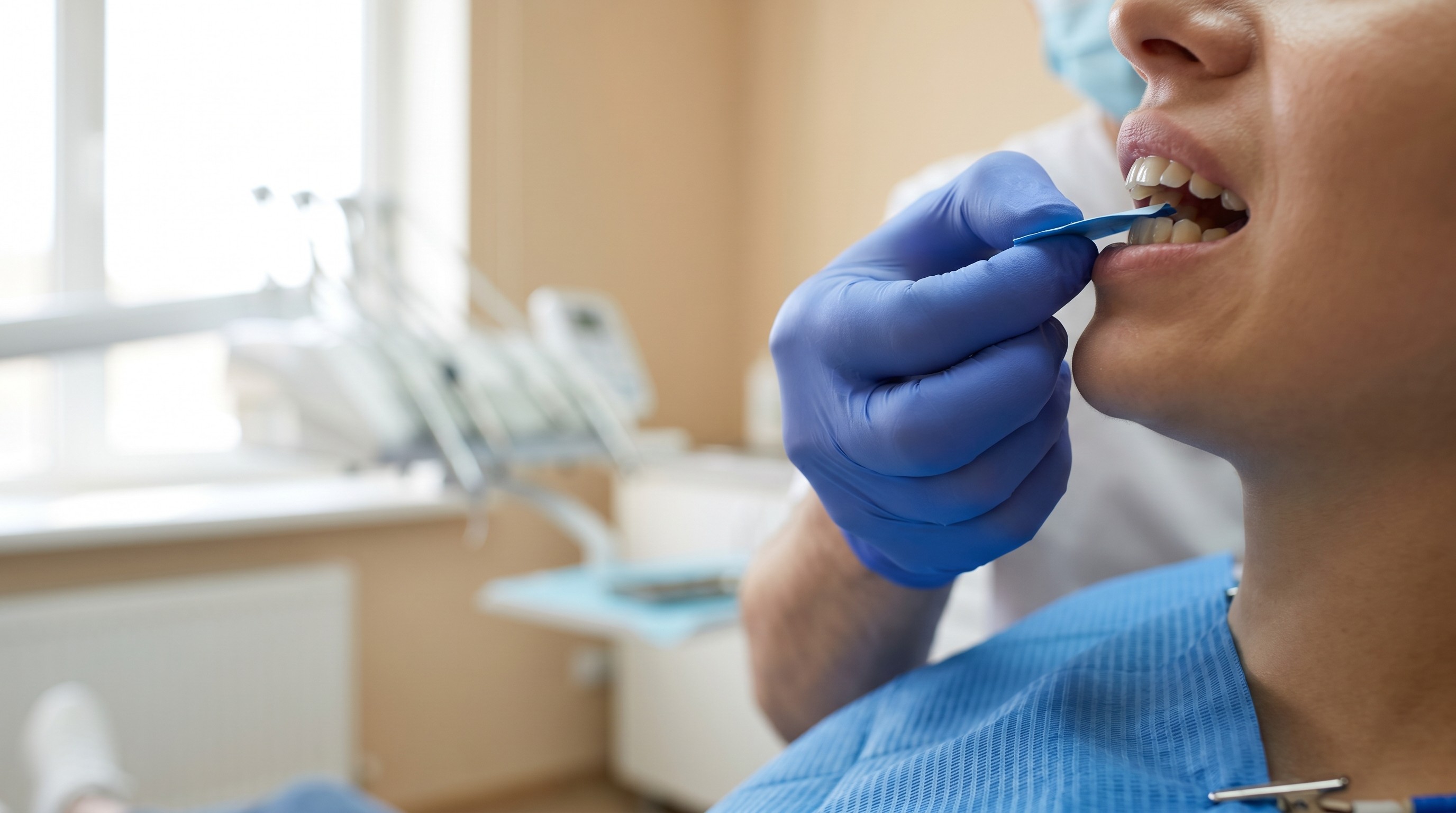
The tool is thin colored film called articulating paper. You bite down, slide your jaw side to side, and the paper leaves marks where teeth contact. On an implant crown, we're looking for marks that match the rest of your bite in size and color intensity. A heavier, darker mark on the implant means it's bearing more force than its neighbors.
The adjustment itself is small. We're talking fractions of a millimeter, polished off with a fine bur, then re-checked with fresh paper. According to American College of Prosthodontists clinical guidance, this is a standard component of implant crown delivery and follow-up.
Sometimes one visit is enough. Sometimes we'll have you come back a week later. Here's why: when you first sit in the chair, your jaw muscles are guarded. They protect the new tooth by not biting all the way down. As days pass and you trust the implant, your muscles relax, and your true bite reveals itself. A second short visit catches anything we couldn't see at delivery.
No numbing needed. No drilling on the implant itself. Just a quick polish and a fresh bite check.
What you can do at home while you wait for your follow-up
If your follow-up is a few days out and the crown feels noticeably tall, a few simple steps help:
Chew on the other side. Give the implant a break from hard or chewy foods until it's adjusted.
Track the pattern. Note when it feels worst. Mornings? Evenings? With certain foods? That information helps us pinpoint the issue.
Skip the DIY fixes. Do not try to file, sand, or wear the crown down yourself. The porcelain is harder than enamel and can chip unpredictably.
Watch for clenching. Many patients unconsciously clench at night for the first week as their brain investigates the new tooth. A soft diet and conscious jaw relaxation during the day help.
If the discomfort is keeping you up or worsening, don't wait for the scheduled follow-up. Call us.
When to call us in Tigard
Ring our office at (503) 639-4330 if you notice any of the following:
Pain that intensifies past seven to ten days after the crown was seated.
Headaches or jaw muscle soreness that started after the implant.
Sensitivity in the teeth on the opposite side of your mouth, where the implant bites against them.
A sensation that the crown is rocking or shifting (this is different from feeling tall and needs prompt attention).
A clicking or popping in the jaw joint that wasn't there before.
For patients commuting down Pacific Highway (99W) from Bull Mountain or King City, we can almost always fit a quick bite-check visit into a lunch break or before-work slot. Adjustments are short. Most patients are in and out in under fifteen minutes.
One small note. Bite adjustments after crown delivery are part of getting the restoration right. You shouldn't expect a surprise bill for a follow-up tweak in the weeks after seating. If you're ever unsure, just ask before the appointment.
An implant doesn't yield like a natural tooth, so even a perfectly shaped crown can register as prominent until your bite adapts.
Frequently Asked Questions
How long does it take to get used to a new implant crown?
Most patients adapt within one to two weeks. The sensation of "different" usually fades as proprioception adjusts and the surrounding muscles relax into the new bite pattern. If you're still actively bothered by the crown after two weeks, that's the cue to come in for a quick check rather than waiting it out longer.
Can a high implant crown damage the implant?
Yes, if it stays high long-term. Sustained excess force on an implant is linked to screw loosening, crown fracture, and bone loss around the implant. The good news is that catching it early and making a small adjustment eliminates that risk entirely. This is why the follow-up visit after crown delivery matters.
Will my dentist charge for a bite adjustment after the crown is placed?At Inspire Dental, bite adjustments in the weeks following crown delivery are part of completing the restoration. Practices generally treat this as expected follow-up rather than a separate billable visit. If you're a patient elsewhere, it's reasonable to ask about this when you book the appointment.
Why does my implant feel taller at night than in the morning?
Two reasons. First, jaw muscles fatigue throughout the day, so awareness of any contact issue grows by evening. Second, many people unconsciously clench more during the day under stress, irritating the area. If the difference between morning and night is dramatic, mention it at your follow-up. It often points to either a high spot or nighttime grinding worth addressing.
Should I wait to see if the feeling goes away on its own?
Up to about ten days, yes, mild adaptation is reasonable. Beyond that, no. Persistent soreness, single-point contact, or worsening discomfort won't resolve on its own and risks loading the implant unnecessarily. A two-minute adjustment fixes it. There's no reason to tough it out.
If your new implant crown feels off, we'd rather see you for a quick visit than have you wait. Call Inspire Dental in Tigard at (503) 639-4330, and we'll find a slot that fits your day.