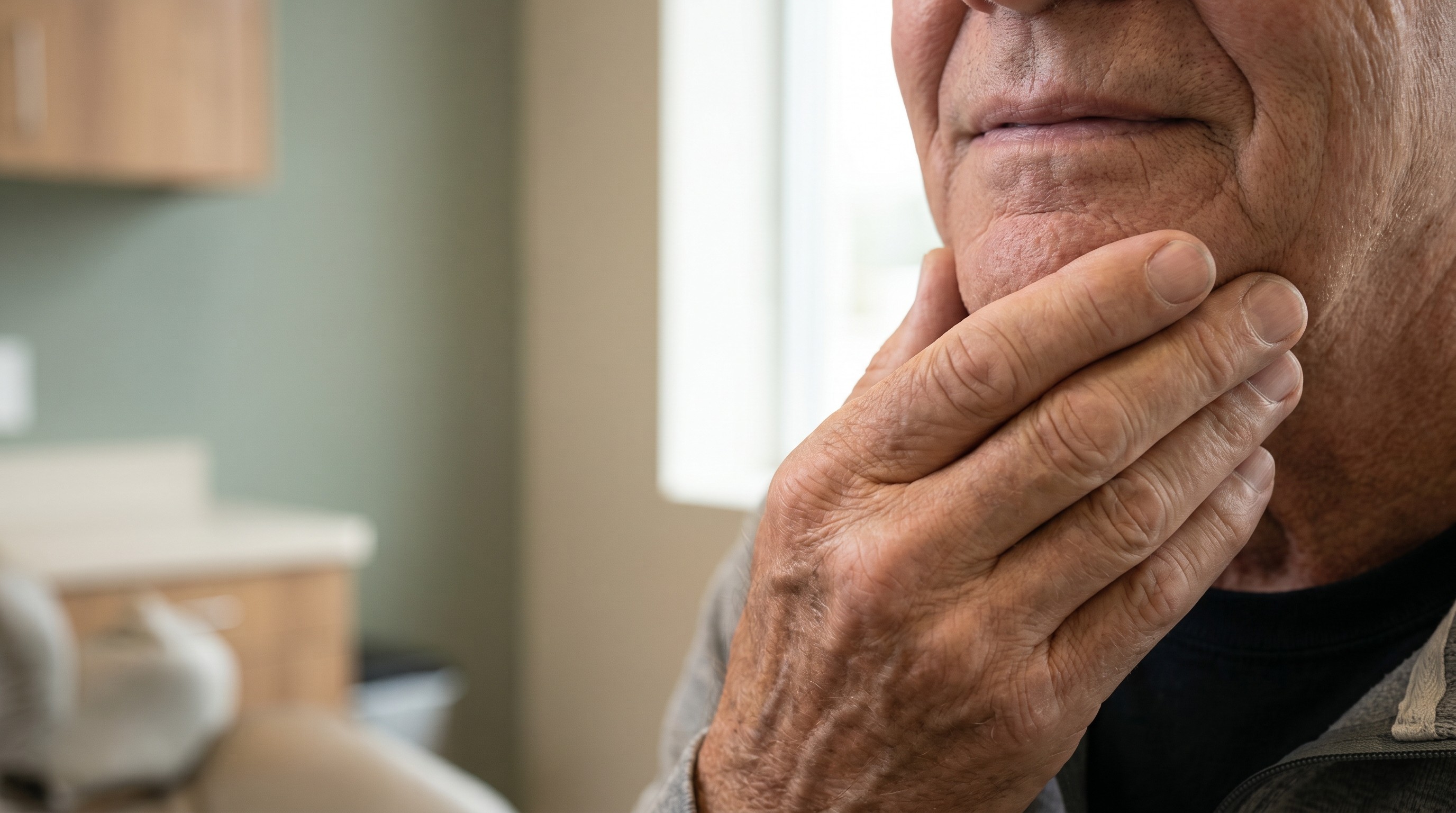
Why Does My Dental Implant Feel Numb or Tingly in the Lip?
Tingling or numbness in the lower lip after a dental implant usually means the inferior alveolar nerve, which supplies feeling to the lip and chin, is irritated by swelling or pressure from nearby surgery. Most cases fade within days to a few weeks. Numbness lasting beyond a week or worsening should be evaluated promptly.
At Inspire Dental in Tigard, this is one of the more anxiety-provoking calls we get after a lower-jaw implant. Patients tell us the local anesthetic should have worn off hours ago, but their lip still feels strange. We hear you. The good news is that in the vast majority of cases, the sensation is temporary and follows a predictable healing curve.
Here is what is actually happening, and when to pick up the phone.
What does lip or chin numbness after a dental implant actually feel like?
Most patients describe it in one of a few ways. A pins-and-needles tingle, like the lip is just starting to wake up. A rubbery, padded feeling along the chin. Or the classic "novocaine that never wore off" sensation, where touch is dulled but not gone. A few notice it on the side of the tongue.
It is almost always one-sided. It tracks the lower lip, the chin, and sometimes the gum near the front teeth on the same side. It is not the same as soreness, tightness, or pressure at the implant site itself. Those sensations are local healing. Lip and chin sensations are referred from a nerve deeper in the jaw.
Some patients notice it the moment the anesthetic wears off. Others feel it appear a day or two later as swelling builds. Both patterns are worth reporting, but neither is automatically alarming.
Why does this happen, and what nerve is involved?
The inferior alveolar nerve runs through a bony canal inside the lower jaw. According to standard oral anatomy references from the NIDCR, this nerve supplies sensation to the lower lip, the chin, and the lower teeth on its side. A second nerve, the lingual nerve, runs along the tongue side of the lower jaw and carries feeling from part of the tongue.
Lower-jaw implants sit in the same neighborhood as these nerves. Not on them, ideally, but near them. Sensation changes can come from a few sources:
Swelling and bruising from the surgery pressing on the nerve
Pressure from the implant itself if it sits close to the canal
Inflammation around the surgical site that takes a few weeks to settle
Rarely, direct contact with the nerve during placement
Upper-jaw implants are a different story. They do not touch the inferior alveolar nerve. If you had an upper implant and feel cheek fullness, sinus pressure, or numbness near the upper lip, that is a separate conversation and worth a call, but it is not the same anatomy.
Is temporary numbness after implant surgery normal?
Some lingering numbness in the first 24 to 48 hours is expected from the local anesthetic alone. Lower-jaw blocks can take longer to fade than people remember.
Mild tingling that improves day by day over one to three weeks is usually swelling-related. As the inflammation around the nerve settles, normal sensation returns in patches. Patients often describe a tingling "wake-up" feeling as it resolves, similar to a foot that fell asleep.
According to peer-reviewed literature in the Journal of Oral and Maxillofacial Surgery, altered sensation after dental implant surgery is most often temporary and resolves as inflammation subsides. Persistent altered sensation beyond four to eight weeks is the threshold where we want to image and reassess.
Short version. Day one to two, expect some. Week one to three, expect steady improvement. Beyond that, we want to see you.
When should I call my dentist about lip tingling?
Some timing rules we use with our King City and Summerfield patients:
Same day if numbness is total (no feeling at all) and present immediately after the anesthetic should have worn off
Within a week if the tingling is not improving even slightly day by day
Promptly if you also have severe pain, fever, or swelling that is spreading
Always mention if you have bitten your lip or cheek without realizing it
That last one matters. A patient from Summerfield came in after a lower right implant and mentioned she had bitten the inside of her lip twice at breakfast without feeling it. That single detail told us more than any other symptom. Altered sensation means you cannot trust the warning signals your lip normally gives you. Eat soft, cool foods on the other side until things normalize.
How is implant-related nerve sensation evaluated and managed?
When a patient comes in with persistent lip or chin tingling, here is what we typically do at our office on the Pacific Highway 99W corridor:
Map the affected area. We use a light touch test across the lip, chin, and gum to chart exactly where sensation is altered. This gives us a baseline to compare against in two weeks.
3D cone-beam CT imaging. According to ADA and American Academy of Oral and Maxillofacial Radiology guidance, CBCT lets us measure the exact distance between the implant and the inferior alveolar nerve canal. We can see what is happening, not guess.
Match the plan to the finding. Most cases are managed with watchful waiting and anti-inflammatory medication. If the implant sits closer to the canal than we like, we sometimes back it out slightly. In rare cases, removal and a revised plan is the right call.
According to AAOMS clinical guidance, persistent nerve-related altered sensation after implant placement is uncommon, particularly when pre-surgical CBCT planning is used. Most patients recover fully.
How do we reduce nerve risk before implant surgery?
Prevention is the better story. Before we place any lower-jaw implant, we do the following:
Pre-surgical CBCT scan to map the exact path of the inferior alveolar nerve
Guided surgery planning that locks in implant length, angle, and depth
A safety margin between the planned implant tip and the nerve canal
A consultation conversation about your specific anatomy, not a generic plan
For our Bull Mountain and King City patients especially, where lower-arch implants and full-arch restorations are common, this pre-planning is non-negotiable. Imaging first. Drilling later. That is the whole trick.
Frequently Asked Questions
How long does lip numbness usually last after a lower dental implant?
Mild tingling from the anesthetic usually fades within 24 to 48 hours. Swelling-related sensations typically improve steadily over one to three weeks. If you notice no improvement by the end of the first week, or sensation is getting worse rather than better, call us so we can evaluate.
Can lip tingling after an implant be permanent?
Permanent altered sensation is uncommon, especially when CBCT imaging and guided planning are used before surgery. The vast majority of patients recover normal feeling within weeks. When sensation does not return on its own, options include adjusting the implant position, medication, or referral for specialized nerve evaluation.
Is it safe to eat or drink hot liquids when my lip is numb?
Be careful. According to AAOMS patient education materials, patients with lip or tongue numbness may unknowingly bite or burn the affected area. Stick to lukewarm foods and chew on the opposite side until full sensation returns. No coffee straight from the pot.
Will my dentist remove the implant if it is too close to a nerve?
Sometimes, yes. If a CBCT scan shows the implant is pressing on or sitting too near the nerve canal, we may back the implant out slightly, change its position, or in rare cases remove it and revise the plan. The decision is always made together with you, with imaging on the screen.
Does upper jaw implant surgery cause any numbness?
Upper-jaw implants do not affect the inferior alveolar nerve, so true lower-lip numbness is not a typical concern. Some patients notice cheek fullness, sinus pressure, or temporary numbness near the upper lip from local anesthetic. If anything feels off after an upper implant, call and describe it. We would rather hear from you early.
Talk to us if something feels off
A strange sensation after implant surgery is not a sign you did anything wrong. It is a signal worth reporting. We would rather take a look at week one than guess at week six. If you are healing from a lower-jaw implant and the lip or chin feels different, call Inspire Dental in Tigard at (503) 639-4330. We will get you in, image what we need to image, and walk you through what we see.